When a water heater fails, or when you're building or remodeling, the big question is whether to stick with a traditional tank or switch to tankless. Both work well in Treasure Valley homes, but they suit different households. Here's how they compare, with a few Idaho-specific factors most guides leave out.
How Each One Works
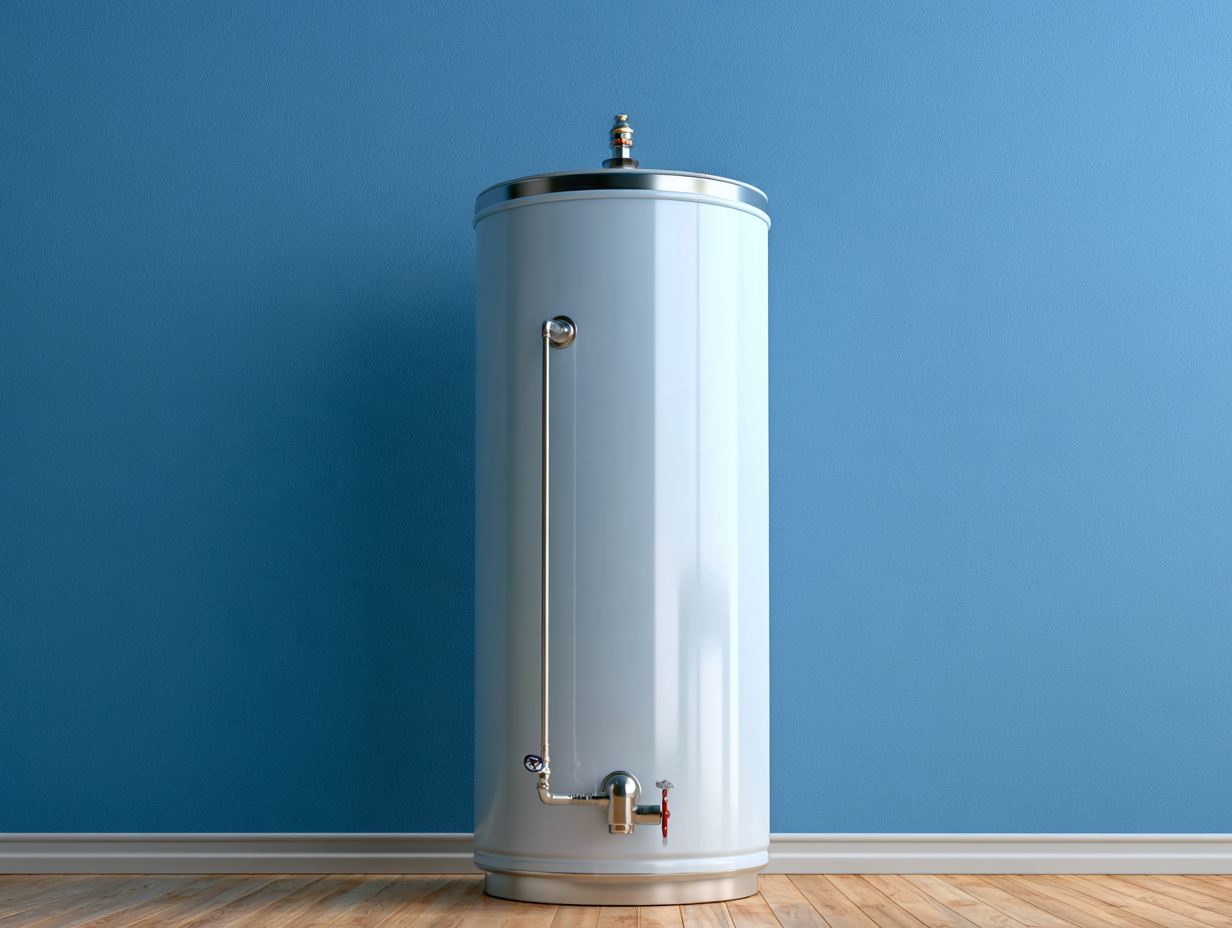
A tank water heater keeps 40 to 80 gallons of water hot and ready. When you use hot water, cold water refills the tank and gets heated.
A tankless (on-demand) water heater heats water only as it flows through the unit. There's no stored hot water, so it never "runs out", but it can only heat so many gallons per minute at once.
Side-by-Side
| Tank | Tankless | |
|---|---|---|
| Upfront cost | Lower | Higher (unit + installation) |
| Space | Takes floor space | Wall-mounted, compact |
| Hot water supply | Can run out | Continuous, within flow limits |
| Energy use | Keeps stored water hot all day | Heats only on demand |
| Typical lifespan | About 8 to 12 years | Often longer with maintenance |
| Hard-water maintenance | Annual flushing | Regular descaling |
| Installation changes | Usually direct replacement | May need larger gas line, venting or electrical service |
The Idaho Factors
Cold incoming water. In winter, groundwater coming into Treasure Valley homes is colder than in warmer states. Tankless units have to raise the temperature further, which reduces how many fixtures they can run at once. Sizing for winter, not summer, matters.
Hard water. Scale builds up in a tankless heat exchanger quickly. Plan on regular descaling, or a water softener, to keep it running well. Tank heaters suffer too, but sediment there mainly shortens their life. See how hard water affects your water heater.
New construction. Many new homes in Meridian, Star and Eagle come with tankless units already installed. If yours did, ask a plumber to show you how to descale it, since many owners never do.
Who Tank Heaters Suit
- Households that want the lowest upfront cost
- Homes where the existing gas line and venting fit a tank
- Replacing a failed heater quickly with minimal changes
- Families who don't run out of hot water now
Who Tankless Suits
- Households that regularly run out of hot water
- Homes where floor space is tight
- Owners planning to stay long enough to benefit from energy savings
- Homes where the gas line and venting can support it (or where upgrades make sense)
Sizing Matters More Than Brand
For tank heaters, look at the first-hour rating on the label: how many gallons of hot water the heater can deliver in an hour of heavy use. A household that runs back-to-back showers in the morning needs a higher rating than a couple who rarely overlap.
For tankless heaters, the key number is gallons per minute (GPM) at a given temperature rise. Add up the fixtures you might run at once (a shower, the dishwasher and a bathroom sink, for example) and compare that to what the unit can deliver when the incoming water is at its coldest in January. An undersized tankless unit will run lukewarm whenever two showers run together.
A plumber can size either type from your household's real habits, not just the number of bedrooms.
Maintenance Compared
| Tank | Tankless | |
|---|---|---|
| Routine task | Flush sediment yearly | Descale on the manufacturer's schedule |
| Anode rod | Check every few years | Not applicable |
| Filters | None | Inlet screen to clean |
| Venting | Check annually (gas) | Check annually (gas) |
Skipping maintenance shortens the life of both, and in hard-water areas it matters even more.
Cost Factors to Ask About
Rather than a single price, the total cost depends on:
- The unit's size and type
- Whether gas line, venting or electrical upgrades are needed
- Permit requirements
- Removal and disposal of the old heater
- Whether a water softener or descaling kit is recommended
Ask the plumber to break these out so you can compare options fairly.
Hybrid Heat-Pump Water Heaters
A third option is a heat-pump (hybrid) water heater, an electric tank that pulls heat from the surrounding air. They're very efficient but need space and work best in a garage or basement that doesn't get too cold, which can be a limitation in an unheated Idaho garage in January.
Replacing a Failed Heater in a Hurry
When a tank lets go and the garage floor is wet, most people want hot water back as soon as possible. Swapping in a similar tank is usually the fastest route, since it fits the existing gas line, venting and space. Switching to tankless takes more planning: the gas line may need to be upsized, new venting installed and a permit pulled. If you've been curious about tankless, it's worth asking the plumber whether a quick tank replacement now and a planned upgrade later makes more sense than rushing a bigger change.
Getting Help
If your water heater is leaking, failing or just old, call (208) 603-5209 to get connected with an independent plumber who can walk you through the options. Learn more about water heater repair and replacement and plumbing in Caldwell.
How Treasure Valley Hard Water Affects Your Water Heater and Pipes
What mineral-heavy water does to water heaters and fixtures, and how to protect them.
How to Find a Hidden Water Leak in Your Home
Step-by-step checks, from the water meter test to the crawl space.