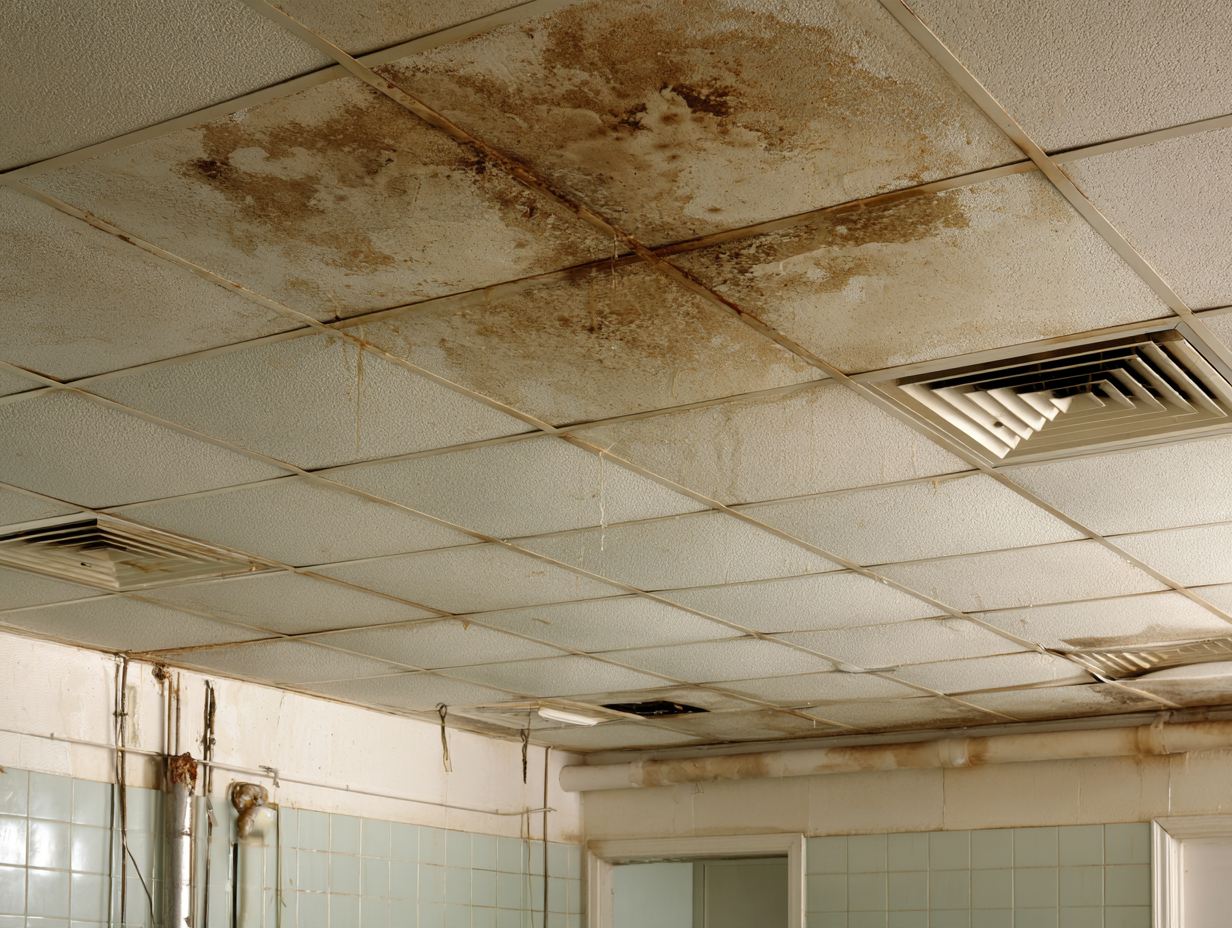
A hidden leak is one of the most expensive plumbing problems because it can run for months before you notice. By the time a stain or soft spot shows up, water has often soaked framing, insulation and subfloor. The good news: a few simple checks can tell you whether you have a leak and roughly where it is.
Step 1: Do the Water Meter Test
- Turn off every faucet, appliance and fixture that uses house water.
- Find your water meter, usually in a box near the street.
- Write down the reading or watch the small triangle or dial (the leak indicator).
- Wait 30 to 60 minutes without using any water.
- If the reading changed or the indicator moved, water is leaking somewhere.
To narrow it down, close the main shutoff at the house and check again. If the meter still moves, the leak is likely in the underground line between the meter and the house.
Step 2: Check the Toilets
Toilets are the most common silent leak. Put a few drops of food coloring in the tank and wait 15 minutes without flushing. If color shows up in the bowl, the flapper is leaking. Also listen for the tank refilling on its own.
Step 3: Look Under Every Sink
Check supply lines, shutoff valves and drain connections under kitchen and bathroom sinks. Feel the cabinet floor for dampness or swelling. Dishwasher and refrigerator ice-maker lines are frequent culprits.
Step 4: Check the Water Heater and Laundry
Look for moisture around the base of the water heater, the relief-valve discharge pipe and the washing machine hoses. Rubber washer hoses crack with age.
Meter moving but can't find the leak?
Call (208) 603-5209 to reach a local plumber.
Call (208) 603-5209Step 5: Look for Signs in Walls, Floors and Ceilings
- Stains, bubbling paint or soft drywall
- Warped or cupping floors
- Warm spots on the floor (a hot-water line under a slab)
- Musty smells
- The sound of running water when nothing's on
Step 6: Check the Crawl Space
Many Treasure Valley homes, from older houses in Boise to newer subdivisions in Meridian and Kuna, sit over crawl spaces. With a flashlight, look for standing water, wet insulation, dripping pipes or damp soil under bathrooms and the kitchen.
Step 7: Walk the Yard
Look for a soggy, sunken or unusually green strip between the meter and the house. That can point to a service line leak. In subdivisions with pressurized irrigation, remember that irrigation leaks won't show on your house meter.
The Most Common Hidden Leaks
In order of how often they turn up:
- Running toilets, usually a worn flapper or fill valve
- Supply lines under sinks and behind toilets, especially older braided or plastic lines
- Washing machine hoses that crack or bulge with age
- Ice-maker and dishwasher lines behind appliances
- Shower and tub valves leaking inside the wall
- Water heater fittings and relief valves
- Underground service lines between the meter and the house
- Pipes under a slab or in a crawl space
Checking the first six yourself takes about 15 minutes and finds most leaks.
What a Leak Really Costs
The water itself is only part of it. A slow leak inside a wall soaks insulation, rots the bottom plate and studs, warps flooring and creates the damp, dark conditions mold loves. Under a slab, a hot-water leak keeps the water heater running constantly. In a crawl space, it raises humidity under the whole house. The longer it runs, the bigger the repair, which is why a meter that moves when nothing's on is worth acting on right away.
Irrigation vs. House Water
Many subdivisions in Caldwell, Nampa and across Canyon County have pressurized irrigation: a separate, untreated water system for lawns and gardens, usually running from spring into fall. A leak in an irrigation line won't move your house water meter, and a leak in your house service line has nothing to do with the sprinklers. If you see a wet spot in the yard, note whether it appears only when the sprinklers run or stays wet regardless. That simple observation tells a plumber which system to start with.
When to Call a Plumber
Call if the meter test shows a leak you can't find, if you see stains or warm spots, or if you suspect a leak inside a wall, under a slab or in the yard. Plumbers use acoustic listening, thermal imaging and pressure testing to pinpoint leaks without tearing out more than necessary. Learn more about leak detection and pipe repair.
Why Fast Matters
The longer a leak runs, the more damage it does: rot, mold, ruined insulation and a higher water bill every month. If you live in a larger home with long pipe runs, as is common in Eagle, water can travel a long way before it shows.
Call (208) 603-5209 to get connected with an independent plumber who serves Caldwell and the Treasure Valley. Learn more about plumbing in Caldwell.
Frozen and Burst Pipes in Treasure Valley Winters
How to keep pipes from freezing during a cold snap, and what to do if one bursts.
Tank vs. Tankless Water Heaters for Idaho Homes
How the two compare for Treasure Valley homes, including hard water and cold winters.